A Louisiana family says they buried the wrong grandmother, and the cremation that followed may have erased the proof.
Story Snapshot
- Two Shreveport families say a funeral home mixed up the bodies of their loved ones.
- Relatives viewed the woman in an open casket, raised doubts, and were assured of the identity.
- The body shown at the service was later cremated, limiting the chance for DNA testing.
- State regulators opened an investigation; the funeral home apologized and promised a review.
What The Families Report Happened In Shreveport
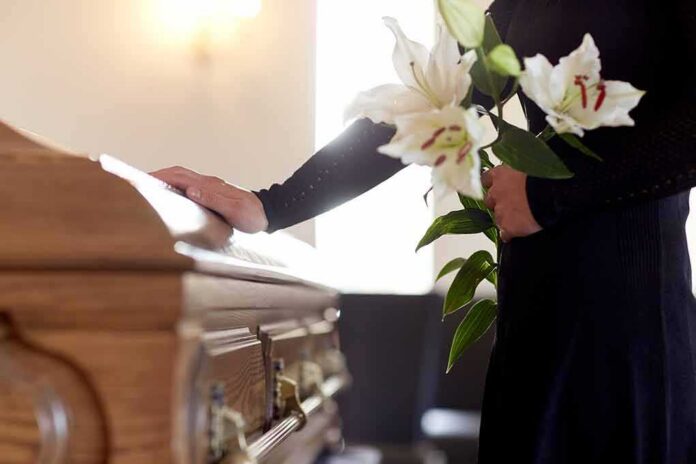
Relatives of Gloria English say they held a private open-casket funeral on November 12 at Heavenly Gates in Shreveport. Family members told reporters the woman in the casket did not look like English. Staff at the funeral home assured them it was her despite those doubts, according to English’s granddaughter, Treasha English. After the service, the remains were cremated. That step now makes hard confirmation much tougher if questions remain about identity.
At the same time, the family of another woman, Jean Mims, says Heavenly Gates could not locate Mims’s body before her planned funeral. A sister of Mims reviewed a casket photo from English’s service and said the woman looked a lot like Mims. She said she was “about ninety percent sure” based on cheekbones, nose, and hands. The Caddo Parish coroner said the funeral home reported that a “mix-up” had occurred, according to local coverage.
What The Funeral Home And Officials Have Said
Heavenly Gates issued a public apology to both families and said it started an internal investigation. The statement did not confirm a body swap or explain the paperwork issue that one family reported when they went to collect ashes. The Louisiana State Board of Embalmers and Funeral Directors opened an investigation, which could review intake records, tags, logs, and cremation paperwork to confirm each step. Regulators have not released findings yet.
Reporters say funeral home staff told the Mims family that several bodies had been sent for cremation and that Mims might have been among them. That account, if accurate, would help explain why a body could not be located later. It would also make confirming identity with DNA far harder after the fact. These are serious claims. They need documentary proof, which the public has not yet seen.
Why Identification Errors Happen—And Why They Shake Trust
Misidentification after death is uncommon but documented. A review of serious post-death incidents found cases where the wrong person was examined or released because safeguards failed. Similar names, poor labeling, or rushed handoffs were common problems in those events. Families often trust visual recognition at a viewing, but illness, embalming, and makeup can change how someone looks. That makes chain-of-custody paperwork and tags the key guardrails when emotions run high.
Louisiana law and board rules spell out duties for funeral homes, crematories, and directors, including licensing and identification standards for remains and caskets. Board minutes in recent years stressed the need to follow identification rules on caskets to avoid tragic errors. If investigators confirm a breakdown here, they could require corrective steps, levy penalties, or both. If records show proper handling, that finding would matter too. Either way, transparent documentation is the path to clarity.
The Evidence Gaps—and What Could Settle Them
Right now, public claims hinge on memory, a casket photograph, and secondhand accounts. The strongest test would be a full chain-of-custody file for both decedents, from intake to disposition. That file should include hospital release forms, identification tags, embalming and preparation logs, signed cremation authorizations, crematory receipts, and ashes release documents. The board investigation is the best route to surface those records and compare dates, signatures, and identifiers.
Because one set of remains was cremated, DNA may not be available. Investigators could still review any retained dental material, medical implants, or crematory logs if they exist. A qualified facial comparison expert could analyze the casket photo alongside known photos with care, though that result would be probabilistic, not final. Until the board reports, the dispute remains unresolved. What is clear is how one paperwork failure can deepen grief and erode trust across a whole community.
Why This Story Resonates Beyond One Funeral Home
Families expect dignity, accuracy, and honesty at life’s hardest moment. When those duties falter, people across the political spectrum see the same pattern: systems that promise care but deliver confusion. Local regulators must show their work and enforce clear standards. Funeral homes must keep meticulous records and listen when families raise real-time concerns. Quick, public answers—backed by documents—are the only way to rebuild confidence after a case like this.
Sources:
nypost.com, ksla.com, fox17.com, journals.sagepub.com, doa.la.gov
© impactheadlines.com 2026. All rights reserved.