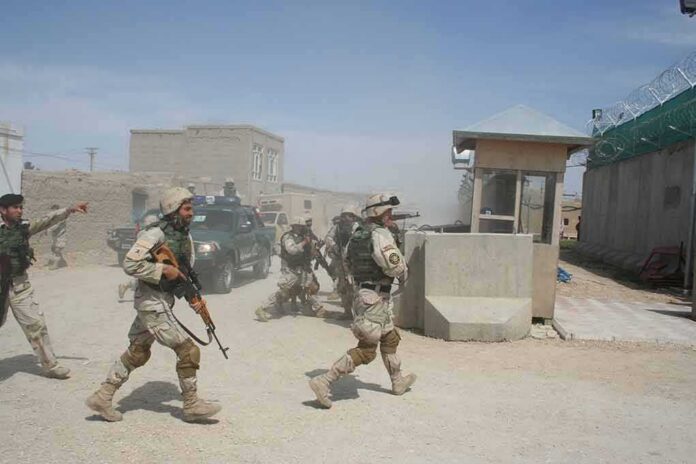
Mexican special forces captured FBI Top Ten fugitive Fausto “El Chapo Isidro” Meza Flores after a nighttime raid in Sinaloa that sparked fierce street battles.
Story Highlights
- Mexico’s defense ministry says elite troops seized Meza Flores in Guasave and flew him to Mexico City.
- The arrest triggered gunfire, burning vehicles, and panic around the city and near a pro baseball game.
- Reports identify Meza Flores as an FBI Ten Most Wanted fugitive tied to a Guasave-based criminal network.
- Research shows kingpin captures can bring short wins but also fuel more violence as groups splinter.
Mexico’s Operation and Immediate Aftermath
Mexico’s Secretariat of National Defense reported that special forces moved on a target in Guasave on the night of November 20. Officials said troops set a perimeter, came under fire and explosives, and detained Fausto Isidro Meza Flores with two alleged aides. Authorities then flew the three to Mexico City on a Mexican Air Force aircraft and placed them with prosecutors for legal processing. Separate reports describe a running fight, roadblocks, and burned cars across parts of Sinaloa.
Witness accounts and local footage shared by media show chaos near a professional baseball stadium as gunfire echoed and people fled. Reports from the same night mention military helicopters, armored vehicles, and tense searches around Guasave. Outlets covering the events describe multiple clashes between security forces and suspected cartel gunmen as the city locked down. Those details, while vivid, track with past high-profile raids in Sinaloa and other hotspot states.
Who Is “El Chapo Isidro” and Why It Matters
News outlets identify Meza Flores as an FBI Ten Most Wanted fugitive and an alleged leader of a Guasave-based criminal group often called the Meza-Flores organization or Los Mazatlecos. Reports link him to trafficking operations and note he faces charges in Mexico and the United States. Some coverage references shifting alliances with other cartels over the years, reflecting how groups merge, split, and rebrand as power lines move on the ground.
Mexico’s defense ministry said two alleged associates also went into custody: a reported second-in-command and a financial operator. Officials stated all three were flown to the capital for prosecution, indicating federal-level handling of the case. That chain of custody suggests the government aims to keep the process controlled and visible after the violent scenes that followed the raid. Further legal steps will signal whether extradition is likely or if Mexico will try first.
The Bigger Picture: Kingpin Strategy’s Tradeoffs
This arrest fits a long-running playbook: target top leaders to disrupt cartels. Research on Mexico shows this can be a short-term win yet cause splintering, turf fights, and higher killings in the months that follow. One National Bureau of Economic Research study found that captures of leaders increase homicides in the city of capture and in places where the group operates, echoing past spikes seen after headline arrests.
Mexico captures ‘El Chapo Isidro’ in deadly raid, but Sinaloa’s cartel war is far from over
Mexico’s capture of FBI fugitive ‘El Chapo Isidro’ leaves 11 dead in Sinaloa, raising questions about cartel violence, US-Mexico security cooperation and the future of the region’s drug…
— Research, News & Analysis (@RNA_NewsMedia) November 22, 2026
For Americans frustrated by deadly fentanyl flows, border chaos, and cross-border crime, a high-profile takedown looks like overdue action. For Mexicans living where firefights erupt after each “success,” the fear is different: more groups, more battles, and more strain on local life. Both views grapple with the same reality. Arrests can be real wins, yet they will not by themselves fix weak institutions, corrupt networks, or a black market worth billions.
Sources:
redstate.com, cnn.com, the-star.co.ke
© impactheadlines.com 2026. All rights reserved.