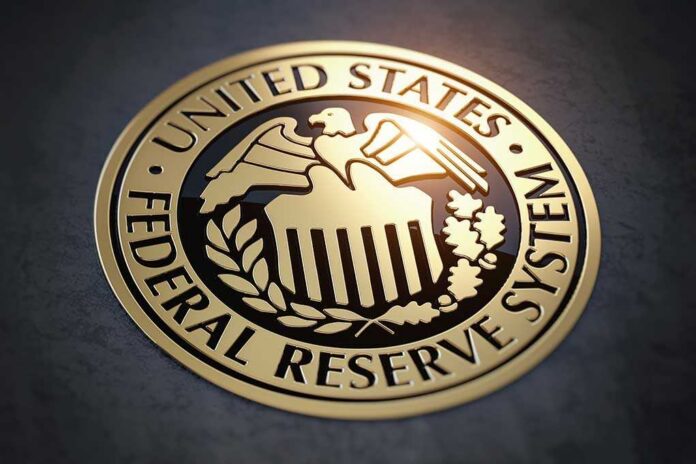
Federal Reserve’s decision to hold interest rates steady amid the US-Iran war risks trapping everyday Americans in higher costs just as President Trump’s economic revival gains momentum.
Story Snapshot
- FOMC expected to maintain federal funds rate at 3.5%–3.75% on March 18, 2026, with 99% market probability per CME FedWatch.
- February jobs loss of 92,000 pushes unemployment to 4.4%, signaling labor weakness despite prior stabilization.
- US-Iran war spikes oil prices, driving inflation risks that delay rate cuts and echo past fiscal mismanagement pains.
- Jerome Powell’s penultimate meeting precedes Kevin Warsh’s Trump-nominated replacement, promising a firmer stance on inflation.
- CPI at 2.4% year-over-year holds steady, but full energy impacts from war loom in upcoming data.
Fed Holds Firm Amid Jobs Slump and War Chaos
The Federal Open Market Committee convenes March 18, 2026, to decide on the federal funds rate, currently targeted at 3.5%–3.75%. Markets price a 99% chance of no change, per CME FedWatch Tool. This follows three 2025 rate cuts that lowered the target to its lowest since 2022. February brought a 92,000 job loss, lifting unemployment to 4.4%. The effective rate stood at 3.64% as of March 13, with 10-year Treasury yields climbing to 4.28%.
US-Iran War Fuels Oil Volatility, Stalling Relief
Early 2026 escalation in the US-Iran war disrupts oil supplies, spiking energy costs not yet fully reflected in March 11 CPI data at 2.4% year-over-year. The Fed targets 2% inflation, but war-induced shocks risk pushing it higher, similar to 1970s oil embargoes that forced tightening despite recessions. January minutes stressed holding rates if inflation persists. This prudent stance prioritizes price stability over immediate jobs support, protecting purchasing power long eroded by past overspending.
Stakeholders Balance Inflation Control Against Growth
FOMC members, led by Chair Jerome Powell, weigh dual mandates of price stability and maximum employment. Powell oversees his final major decision before May replacement by Trump appointee Kevin Warsh, a potential hawk favoring tighter policy. Governors like Christopher Waller and Stephen Miran influence votes amid internal debates on holds versus hikes. Economists Nicole Bachaud of ZipRecruiter and Cory Stahle of Indeed highlight February’s jobs reversal after January gains, viewing a six-month stagnation trend.
Trump Era Shift Promises Disciplined Policy
Kevin Warsh’s pending Senate confirmation signals President Trump’s push for less dovish Fed leadership, countering years of easy money that fueled inflation. Markets now see 95% hold odds for April and 77% for June, up from prior estimates due to war risks. Updated economic projections, including the dot plot, release post-decision, likely showing reduced 2026 easing amid persistent oil chaos.
Economic Pressures Hit American Families Hardest
Consumers brace for higher gas, grocery, and travel costs from oil pass-throughs, compounding 4.4% unemployment strains. Businesses face elevated borrowing amid rising yields, delaying expansion. Short-term, steady rates anchor expectations but postpone mortgage relief; long-term, embedded inflation could prompt hikes, risking deeper slowdowns. This tests Fed independence under Trump oversight, vindicating calls for fiscal discipline over globalist spending sprees.
Sources:
https://tradingeconomics.com/united-states/interest-rate
https://www.businessinsider.com/march-fed-decision-fomc-powell-hold-rates-us-iran-war-2026-3
https://www.federalreserve.gov/releases/h15/
https://www.kiplinger.com/investing/live/march-fed-meeting-2026-live-updates-and-commentary
https://www.cbsnews.com/news/federal-reserve-interest-rate-decision-iran-war/













![AIR FRANCE A320 & Business Lounge 🇫🇷 Paris CDG to Tunis 🇹🇳 [FULL FLIGHT REPORT]](https://impactheadlines.com/wp-content/uploads/sites/27/2026/08/maxresdefault-34-100x70.jpg "Misbehavior Kills Air France Sauna")