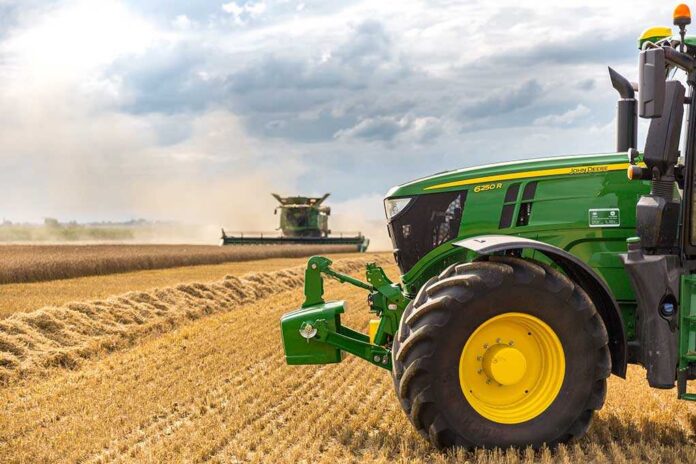
President Trump unveiled $8 billion in one-time harvest payments to offset farmers’ diesel costs, signaling fast federal help as fuel prices squeeze the heartland.
Story Highlights
- USDA announced $8 billion in one-time payments for farmers during the 2026 harvest.
- President Trump tied the aid directly to higher diesel costs at a Kansas event.
- USDA will use a uniform formula and the Farm Service Agency to run payments.
- A separate dyed-diesel step is estimated to save about $640 million in taxes.
What The Administration Announced And Why It Matters
The United States Department of Agriculture said it will make $8 billion available for one-time harvest payments to American farmers this season. The agency framed the plan as help for temporary market disruptions and higher input costs. President Trump announced the move and linked it to rising diesel prices that hit farmers during peak harvest. The Farm Service Agency will run the program, using the Commodity Credit Corporation Charter Act as its legal authority.
President Trump told a Kansas crowd that the Harvest Fuel Relief program will offset diesel costs this harvest. His remarks matched the Department of Agriculture’s release, which set the total at $8 billion. The plan arrives as fuel costs strain margins and make it harder to run combines, trucks, and dryers. This action targets that pressure directly and aims to keep grain moving, bills paid, and small towns steady during the busiest weeks of the farm year.
How Payments Will Be Calculated And Delivered
The Department of Agriculture described a simple, proportional method rather than vague promises. The agency said it will base support on Farm Service Agency planted-acre data, Economic Research Service cost-of-production figures, and World Agricultural Supply and Demand Estimates yields and prices. That framework is designed to scale by crop and region. The department said commodity-specific payment rates would follow, and the agency will administer sign-up and payments through local Farm Service Agency offices.
United Press International reported that the Farm Service Agency will handle the payments and confirmed the one-time design. The Department of Agriculture’s press materials made clear that the program is national in scope. It aims to send help to producers who are harvesting now and burning far more diesel than in spring. That fits the stated goal: stabilize harvest operations when fuel costs spike, while using an existing federal mechanism to move funds quickly across the countryside.
What Is Separate: Dyed-Diesel Tax Savings Estimate
United States Department of Agriculture Secretary Brooke Rollins said earlier in October that an executive-order action involving dyed diesel is expected to save about $640 million in combined federal and state taxes across roughly 224.6 million harvested acres. That estimate is separate from the $8 billion payment program. The dyed-diesel step concerns tax savings. The Harvest Fuel Relief concerns direct one-time payments. Both target fuel costs but use different tools and should not be added together.
🚨 BREAKING: President Trump just announced $8 BILLION in relief for American farmers!
Through @USDA’s new Harvest Fuel Relief Program, we are delivering critical support to farmers facing rising costs and market disruptions.
Thank you, Mr. President for putting FARMERS FIRST… pic.twitter.com/rYVdPnLMj9
— Kat Wall For Texas (@katwallfortexas) October 21, 2026
This relief uses the Commodity Credit Corporation, a long-standing farm finance tool. The Department of Agriculture cited the Commodity Credit Corporation Charter Act for authority and assigned delivery to the Farm Service Agency, which already manages farm programs. That setup helps speed aid and limits red tape for producers who must finish harvest before winter weather hits. The department plans to release crop-by-crop payment details and timing, and then open applications through local offices.
What Farmers Should Watch Next
The Department of Agriculture said payment rates and the application window will be published soon. Producers should watch for county office notices and prepare acreage and production records. Specialty-crop growers and fishermen were invited to share fuel-cost data for review as the department builds methods for non-Title I sectors. While the government set the $8 billion total, the actual per-acre and per-producer amounts will depend on the final formula and sign-up volume once rules post.
Why This Fits A Larger Farm Policy Pattern
Commodity Credit Corporation support has backed agriculture since the 1930s through programs that help stabilize production and prices. The Harvest Fuel Relief program follows that pattern by using budget authority that lets the Department of Agriculture respond when input costs jump mid-season. The urgent need is clear: diesel runs combines, trucks, and grain dryers. By moving dollars through an existing channel, the administration aims to keep food flowing and protect rural jobs during a costly harvest.
Sources:
© impactheadlines.com 2026. All rights reserved.